

Dallas Cosmetic Surgeon featured on The 33 TV News discussing No-Scar Breast Augmentation

January 16th, 2012 by admin
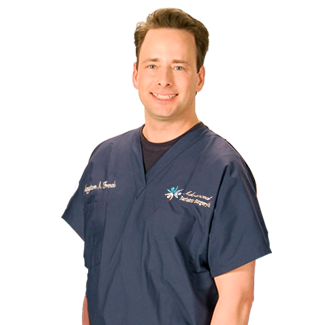
Dr. Clayton Frenzel featured on The CW33 News

Dr. Clayton Frenzel discusses popularity of TUBA breast augmentation on The CW33 News

At his Dallas cosmetic surgery practice, Dr. Clayton Frenzel was recently featured on the CW33 News sharing the secret of a no-scar breast augmentation, otherwise known as trans-umbilical breast augmentation or TUBA.

TUBA Breast Augmentation

TUBA Breast Augmentation aka "belly button" breast augmentation

TUBA, often called the “scarless” or even “belly button” breast augmentation, is an effective method of breast implant placement that’s introduced through the navel, and produces attractive results with scars that are literally invisible.

Forest Park Medical Center surgeon Dr. Clayton Frenzel uses an endoscope to guide the empty saline implants through two tunnels into the chest–when in place the implants are filled with sterile saline to the size and shape the patient wants.

Dr. Clayton Frenzel performing a TUBA procedure.

Dr. Frenzel performing a TUBA procedure

Implanting around the breast or through the armpit can leave visible scars.

Dr. Frenzel said he used to perform the TUBA procedure as many as twenty times a month in California and now it’s growing in popularity here.

“It’s a lot more popular for the younger girls,” Dr. Frenzel said. “The girls between 18 and 25 or 30, once you get in the girls that are 30, 35 or 40 a lot of those patients are choosing silicone for some reason.”

Dr. Frenzel said the procedure takes about an hour with most patients getting back to normal in about a week.

Watch the full story here.

To setup a one-on-one consultation with Dr. Clayton Frenzel for the TUBA procedure, please call the Advanced Cosmetic Surgery office at (817)342-0232 or click here to schedule online.

Dr. C’s Mission Trip in Ecuador

October 3rd, 2011 by admin

Dr. Frenzel is currently on a surgical mission trip in Guayaquil, Ecuador with a group of about 30 surgeons, nurses, techs, translators and general helpers. They’re sponsored by a Christian organization to perform general surgery, some pediatric, obstetrical and plastic surgery.

Below is an email Dr. Frenzel sent the when he arrived in South America:

Saturday, October 1, 2011 10:57 PM

A little update for today…left D/FW at 7:30pm and flew all night. I arrived at 4:30am in Guayaquil and made it to the hostel where we’re staying around 8am. Had some breakfast and then went to the hospital around 9:30 or 10am. We saw about 40 patients in the clinic today and scheduled 20 surgeries for tomorrow, so we should have a busy day full of gallbladder removals, hernia repairs, hysterectomies, ovarian cysts, etc. Monday will be more of the same, plus some thyroid surgeries and c-sections. Looking forward to it and what’s to come.

Talk to you all soon,

Dr. C

Latisse Wishes Challenge Offers Special Discounts

June 21st, 2011 by newseditor

Allergan, maker of Botox, Juvederm and Latisse®, recently kicked off the Latisse Wishes campaign to raise funds for the make-a-wish foundation. For 2011, they’ve enlisted Mad Men actress Christina Hendricks to be the face of the campaign. Like years before, you can donate to Make-a-Wish through the campaign and receive discounts on Latisse eyelash solution.

You can participate in the LATISSE® Wishes Challenge too. Just donate a minimum of $20 to the Make-A-Wish Foundation through the campaign’s website, www.LatisseWishesChallenge.com. Through November 30, 2011, Latisse® will double all donations up to $250,000.

If you’re one of the first 10,000 people making the minimum donation to the Latisse Wishes Challenge, you will receive a free trial certificate for Latisse®. Bring it to your cosmetic surgeon and he or she will determine if Latisse® is right for you.

Also, if you invite two friends to join you in the campaign, they too will receive a $20 rebate off their next purchase of Latisse®.

Ms. Hendricks, along with Claire Daines and Brooke Shields, is the latest spokesperson and user of Latisse. During the Latisse Wishes Challenge, she will be sharing her eyelash-growing experience. About the campaign she says: “Latisse® is also a brand that contributes to children, and I couldn’t think of a better cause to support than the Make-A-Wish Foundation. When I was seven years old, I saw firsthand the difference a wish can make in the life of a child when a girl in my class got her wish to meet Erik Estrada.”

New Procedure Can Double Breast Size with Grafted Body Fat

June 20th, 2011 by Newswriter

Doctors have developed a new fat grafting procedure that can double a patient’s breast size without the need for foreign implants. But it’s what happens in the weeks before the surgery that makes the difference.

The results of a new study published in the journal Plastic and Reconstructive Surgery indicate that the use of a bra-like vacuum device for several weeks before surgery can stretch and expand the breast tissue. When a patient enters the operation, her stretched breast tissue has more room for the fat, which is liposuctioned from another part of the body (usually the thigh) and grafted into the breast.

Fat grafting procedures don’t use foreign implants and often offer more natural and less risky results to breast augmentation patients. However, one of the biggest drawbacks of the procedure is that it usually can’t increase a patient’s breast by more than one cup size. Drs. Daniel Alexander Del Vecchio and Louis Paul Bucky, who authored the study, found that this problem could be overcome with pre-surgical breast expansion: “Pre-expansion to the breast allows for mega-volume (over 300 cc) grafting with reproducible, long lasting results that can be achieved in less than two hours.”

Study Highlights

  • 46 breasts belonging to 25 women
  • patients had first-time enhancement, implant removal, or deformity correction
  • average amount of fat transplanted was 300cc

Study Results (After 6 Months)

  • significant improvements in size
  • soft and natural appearance and feel
  • no cysts, masses, or other abnormalities found under MRI

The surgeons were able to perform a breast fat transfer procedure in less than two hours after some practice. No significant complications were reported.

More research is needed to determine what the long-term implications and safety concerns might be with fat transfer techniques such as this one. New procedures and techniques are constantly being developed, and women who may be considering full, natural breast enhancement in the near future will likely see an expanding range of options available to them.

Wendy’s Obagi Nu-Derm Transformation

June 10th, 2011 by newseditor

Last month, we posted the story of Kristen, a 33-year-old woman who found her skin revitalized by a customized skin therapy regime with Obagi Nu-Derm. Now, the next chapter in Obagi Nu-Derm’s “Watch the Transformation” series of videos has debuted on YouTube.

47-year old Wendy had skin damage accumulate over the decades that made her skin look spotty and lifeless. With freckles, sun damage, and wrinkles around her eyes and lips, Wendy found herself running out of options. “I realized, at this point, I can’t turn anymore to the drugstores or department stores to get the help I’m looking for.”

Wendy finally tried Obagi Nu-Derm, a medical grade skin care line that rejuvenates the skin at the deepest levels. “I spoke with my doctor, and she said it was very important to stick with the program,” Wendy says.

After a week or so, she noticed that she was experiencing redness around the mouth and lips, but not much was happening. “I think I was expecting a quick change, but I’m realizing it’s more of a commitment that I’m making to my skin and that it will take some time.”

Fast forward a few more weeks, and Wendy can’t believe the change in her skin. Her crow’s feet had been minimized, as were the lines around her lips. Overall, she discovered that she had fewer wrinkles and a lovelier, more consistent skin tone.

“I think everybody who likes you says they love you just the way they are, until you look better, and then they like you even more! The Nu-Derm has made a big difference in my skin. I’m happy when I look in the mirror.”

Wendy has begun receiving unsolicited compliments at work, and knows that with sunscreen and a regular daily routine, she can maintain her skin’s vitality and appearance. “I understand that my skin is healing itself, sort of from the inside out, but for me, what matters is that I see a difference when I wash my face and I head out in the morning.”

Texas Medical Board Considers New Regulation of Injectable Products

June 10th, 2011 by newseditor

According to WFAA news  in Dallas, the Texas Medical Board is planning to discuss a change in regulations for physicians performing cosmetic procedures like Botox®, Restylane and other injectable treatments.

In Texas, medications like Botox can only be obtained by a qualified physician (with a medical license). Within a doctor’s office however, the treatment can be delegated to and then administered by, anyone.

Because the market for Botox and cosmetic procedures can be very lucrative, there is a strong allure for physicians with inadequate training to begin offering these treatments. Currently there are no regulations pertaining specifically to the training and qualifications of those who administer a cosmetic injection. Such regulations would also apply to treatments like Juvederm, Sculptra, Radiesse and other popular wrinkle reducers.

The medical board will discuss a regulation that would allow only doctors, nurses and physician assistants to administer a controlled substance such as Botox.

Obagi Transformations: Mandy’s Story

May 31st, 2011 by Newswriter

Last month, you heard the story of Kristen, a 33-year-old woman who treated her bad complexion with a customized skin therapy regime with Obagi Nu-Derm. This month, Obagi’s “Watch the Transformation” series of videos on YouTube continues.

Mandy is 29 and suffered from the effects of sun damage, which included brown spots on her nose and poor skin tone on her forehead, as well as loose facial skin. She always had freckles as a child, but eventually realized that her skin was no longer smooth and youthful. “My mom told me when I was a kid that freckles were angel kisses, but it turns out they’re actually sun damage!”

She used the Obagi C-Rx system, a skin care system that corrects early signs of aging and prevents further damage to the skin from the sun and other factors, much like the Obagi Nu-Derm system corrects more significant damage that has accumulated over time.

Over the weeks, Mandy found that the Obagi system caused a transformation in her skin. Her sunburn lightened up, and spots and freckles disappeared. She found that her cheeks were firmer and tighter, and that the skin coloring on her nose was more even.

“It’s fun to have a glow about you, to have people notice it’s fun to have smooth skin that’s not full of spots. I don’t look like a leopard anymore.”

Obagi products are an alternative to other skin treatments such as CO2 laser resurfacing and chemical peels. Each Obagi program is customized to meet the patient’s unique needs. If you’re considering a prescription-strength skin care regime that outshines popular drugstore brands, contact a physician who has experience developing individualized Obagi programs.

TUBA is the Best Breast Augmentation Procedure Available, Says Expert

May 24th, 2011 by Newswriter

Transumbilical breast augmentation, or TUBA, is one of the most challenging procedures in the field of cosmetic surgery. It involves inserting a tube into the bellybutton and through the abdominal fatty tissue to deliver an implant without breast scarring.

Some have argued that the procedure, which requires the use of an endoscopic camera, has an increased risk because the surgeon does not directly access the breasts. However, according to a review of 3,300 consecutive TUBA cases performed by Dr. Robert A. Shumway from 1994 to 2010, TUBA appears to be faster, safer, and more effective than other methods of breast augmentation.

All surgeries carry certain risks, but Dr. Shumway’s assertion that “TUBA is about as safe as breast augmentation can get” certainly seems to be borne out by the numbers. Here are the postoperative issues and complaints encountered by Dr. Shumway after 17 years and 3,300 TUBA patients:

  • Capsular contracture, which occurred in 69 cases, was the most common complaint. At 2.09%, this was much less than the national average for other augmentation methods.
  • There was one possible infection, treated with an overnight antibiotic intravenous.
  • There were no acute hematomas, and delayed hematomas occurred in less than 0.05% of cases. All were surgically treated and fully resolved.
  • A few other complications had rates of incidence up to 0.18%, and included minor naval scars, breast asymmetry, and size dissatisfaction. These could be resolved with followup treatments.
  • Two patients experienced implant extrusion, one because of a self-induced injury and the other due to unsanctioned postoperative medication and underwire bra use.

The doctor recommends that TUBA patients tell their cosmetic surgeon about over-the-counter and prescription drug use, including those taken in the weeks before and after the surgery. He also recommends the tumescent anesthetic method for its safety and effectiveness, and strongly encourages ongoing postoperative care. Of course, the best way for patients to ensure their safety is to be careful in selecting a qualified and experienced surgeon with training in proven techniques.

Making a Deposit at the Fat Cell Bank

May 16th, 2011 by Newswriter

With the move to more natural foods and lifestyles, many people are seeking to attain the results of traditional cosmetic augmentation without the use of implants or facial fillers. The growing popularity of autologous fat grafting, which transplants fat from one part of a patient’s body to another, has meant that more cosmetic surgery patients are able to achieve their desired all-natural beauty.

But there are benefits to this procedure that extend far beyond the augmentation of breasts or lips; a company in Dallas, Texas called BioLife Cell Bank has established a bank into which patients can deposit fat extracted in the course of liposuction. The fat can be stored for future cosmetic use and may someday have significant implications for medical and genetic research.

Fat extracted from a patient’s body has a variety of applications:

When used for filling out the face, scars, and depressions, transplanted fat can last longer than facial fillers, which often (depending on the type) need to be applied every six months to 1 year.

With this new fat bank, patients can have their fat retained for future use, instead of having it extracted repeatedly for different procedures over time. In the video above, Tina LeBoeuf, a breast reconstruction patient and mother of 3, is having fat taken from her lower body. Her surgeon will be using some of it to reconstruct her breast, and the rest will be mailed to BioLife Cell Bank, ready to be withdrawn at any time. Future procedures would require office injections rather than a stint in the O.R.

The stored fat may also have important applications in the future, since stored fat contains a high concentration of stem cells, which have been shown to have a number of medical applications.

Cosmetic Surgery Declines Among Teens

May 9th, 2011 by Newswriter

There has been a significant decline in the number of cosmetic surgeries among teenagers 18 and younger, according to statistics released by the American Society for Aesthetic Plastic Surgery.

Nonsurgical procedures such as laser hair removal and chemical peels were the most popular cosmetic procedures among teens in 2010, while the most common surgery was otoplasty, which corrects the appearance of protruding ears.

Otoplasty is the most popular cosmetic procedure among children under 18, mostly around the ages of 5 or 6. Recovery from otoplasty is usually fairly quick and the procedure can prevent teasing. Rhinoplasty, or nose reshaping, is also popular during the mid-teen years, and can correct functional problems with the nose at the same time that it improves the appearance.

Other procedures involve reducing breasts, in boys and girls, or correcting breast asymmetry in girls. Liposuction is rare among teenagers, as cosmetic surgeons will often have serious reservations about performing it unless there are clear and unequivocal reasons in favor of it.

The statistics reveal a stunning 38 percent drop in the number of surgical procedures over the last two years, from 203,308 procedures in 2009 to 125,397 in 2010. Both figures are much lower than the 298,704 procedures reported in 2001, and seem to contradict a general impression that teenage cosmetic surgery has been on the rise in the past decade.

How do cosmetic surgeons decide whether a procedure is appropriate for a teenager? They’re always sure to talk with them first. It’s important that the physical feature in question has basically finished growing, since continued growth could distort the effects of the surgery. Cosmetic surgeons also discuss the procedure with the teenager, so that they can:

  • dispel myths and misconceptions
  • set up reasonable expectations for the surgery
  • carefully consider benefits, drawbacks, and risks
  • explore postoperative issues and recovery times

These steps are necessary to ensure that a teenager fully understands the nature of the procedure and will emotionally benefit from the experience.