


Error
  • JUser::_load: Unable to load user with id: 76

Archive for October, 2010

Weight Loss Surgery for Teens May Head Off Lifetime of Obesity

Tuesday, October 26th, 2010 by editor2

teen girls smilingWhile some doctors may be reluctant to perform weight loss surgery on teens, new studies suggest that this measure might help patients head off a lifetime of obesity.

“There’s certainly a feeling among health-care providers and families that little Johnny is really getting heavier and heavier, but all he needs to do is put his mind to it and he can reverse this,” said Dr. Thomas Inge, director of the Center for Bariatric Research and Innovation at the Cincinnati Children’s Hospital Medical Center. “But that is clearly not working for some kids. Until you bring up the option of bariatric surgery for those patients, you haven’t done your job as a doctor.”

Inge’s study of 61 teens found that those with very high body mass indexes (BMI) lost more than one-third of their weight after gastric bypass, but were still heavy enough to be considered morbidly obese.

“We are seeing patients…who are coming to us routinely with a BMI of the high 50s and 60s and 70s,” Inge said. “When we can get to these kids with BMIs in the 40s, we can have a decent chance of turning around their morbid obesity. When BMIs are higher than that, very often we can get their weight down, but they’re still going to remain morbidly obese even after treatment. Once they get into the high 50s and beyond, I think we’ve done the kid a disservice.”

Another small study of 50 severely obese Australian teenagers found that those who had weight loss surgery were much more successful in losing weight. Eighty-four percent of teens who had the surgery lost more than half their excess weight, while only 12 percent of the kids who tried dieting and exercise reached this goal.

Teens who are candidates for bariatric should have already undergone the majority of their linear growth, said Dr. Lori Laffel, chief of the pediatric, adolescent and young adult section at the Joslin Diabetes Center. That would limit weight loss surgery for the most part to girls older than 13 and boys older than 15, she said.

Laffel and Inge agreed that the teenager must also display a certain level of emotional maturity and have a supportive family. For more information, visit womenshealth.gov.

Bariatric Surgery May Improve Memory

Tuesday, October 19th, 2010 by editor2

ribbon tied around index fingerThree months after bariatric surgery patients had a significant improvement in memory function, according to research conducted by Gladys Strain, PhD, director of research for laparoscopic and bariatric surgery at Weill Cornell Medical College.

Bariatric surgery, such as gastric bypass, is an effective obesity treatment, but its effects on cognition have not been well studied, says Strain.

Her study compared 120 bariatric surgery patients (most with gastric bypass and some with lap band) and 60 obese patients who had not undergone surgery. Participants were tested for attention, executive function, memory and language skills before and after surgery, within a 12-week period.

For attention, executive function and language, there were no changes during that three months for the patients, according to Strain. However, there was improvement in memory among the bariatric surgery patients, which was not found in the comparison group.

It’s not clear why the patients’ memories improved. “Bariatric patients have an increased incidence of depressive disorders and anxiety and sedentary lifestyles,” Strain says. As they lose weight, that depression may lift, perhaps explaining the improvement in cognitive skills, she says.

More information about this study is available on WebMD.

Mature Faces Turn to Less Invasive Procedures, Reports WSJ

Thursday, October 14th, 2010 by editor2

Mature womand and man smilingThe Wall Street Journal online reports that older workers are increasingly considering minimally-invasive cosmetic procedures to help them look younger and stay competitive in the current economy.

Statistics compiled by the American Society for Aesthetic Plastic Surgery (ASAPS) show that for those in the 51-64 age range, the number of facelifts dropped from over 75,000 in 2008 to just under 55,000 in 2009. On the other hand, for this same age group, the number of Botox procedures jumped from 672,840 in 2008 to 734,751 in 2009.

“If you are a woman who has to come back to work full-time or a man who isn’t going to be able to retire any time soon, you’ve got to look like you can compete,” says Wendy Lewis, a New York–based plastic surgery and skin care consultant. “And if you are working in a field like media where everyone is really young, you don’t just want to look good for your age, you want to look good, period.”

Overall stats from ASAPS showed that the number of facelifts in the U.S. dropped 29 percent from 2008 and eyelid surgeries declined 23 percent during the same time frame. On the other hand, Botox and Dysport injections rose 3.8 percent from 2008 to 2009, with 2.6 million injections performed last year.

Less invasive procedures not only have less recovery time compared to surgery, but they also generally cost less than cosmetic surgical procedures. However, Lewis does point out that minimally-invasive treatments can be overdone. “There is a point at which you are going to have a better result and spend less money if you just have a facelift,” she says. In addition, there are some problems that can only be fixed by surgery, such as sagging jowls. A cosmetic surgeon can help select the best procedures to address a patient’s concerns.

Advanced Cosmetic Surgery offers a number of non-surgical procedures, including Juvederm, Radiesse, and CO2 Laser Resurfacing.

Study Finds Technique Reduces Post-op Pain for Tummy Tuck Patients

Monday, October 4th, 2010 by editor2

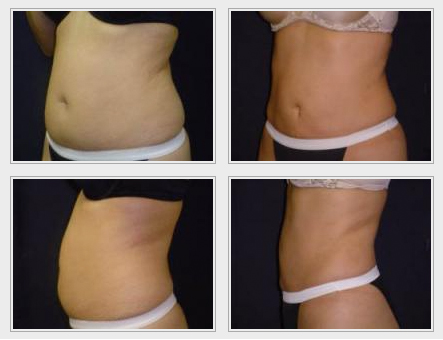
woman's abdomenA new study finds that when patients are injected with a combination of nerve blocks and long-acting local anesthetics into nerve branches around the abdomen before tummy tuck surgery, they have significantly less pain during their recovery period. A nerve block numbs the nerves in the area of the body where it’s injected.

The author, microvascular plastic and reconstructive surgeon Dr. Lu-Jean Feng, reviewed charts of patients who underwent an abdominoplasty over a ten year period. The treatment group included 77 patients who received the numbing solution, which works by blocking pain impulses between the abdomen and brain. The control group included 20 patients who did not receive nerve blocks.

A comparison between the two groups found that  those who received nerve blocks prior to surgery had significantly less pain after surgery, required significantly less pain medication during recovery, and spent less time in the recovery room.

Using recovery room data and patient questionnaires, the study also found that those who received nerve blocks had significantly less pain at home after surgery and were able to resume driving and other normal activities significantly sooner than the control group.

“Today prospective patients are not only looking at the aesthetic quality of results of an elective surgical procedure. They are also looking at ease of recovery and shorter downtimes,” said Dr. Feng, who presented her study at Plastic Surgery 2010, an annual scientific meeting sponsored by the American Society of Plastic Surgeons that was held October 1-5 in Toronto.

Based on the results, Dr. Feng or others may look into the possiblity of using the technique for other cosmetic procedures, like breast augmentation. Another possible use for nerve blocks may be for those recieving a combination of procedures at one time.

The abstract of the study, “Painless Abdominoplasty: The Efficacy of Combined Intercostal and Pararectus Blocks in Reducing Post-Op Pain and Recovery” is available at plasticsurgery.org.